Rebirth: Climate Crisis and Migration – Empowering Youth Workers Through Environmental Awareness and Innovation
- May 8, 2025
- 2 min read
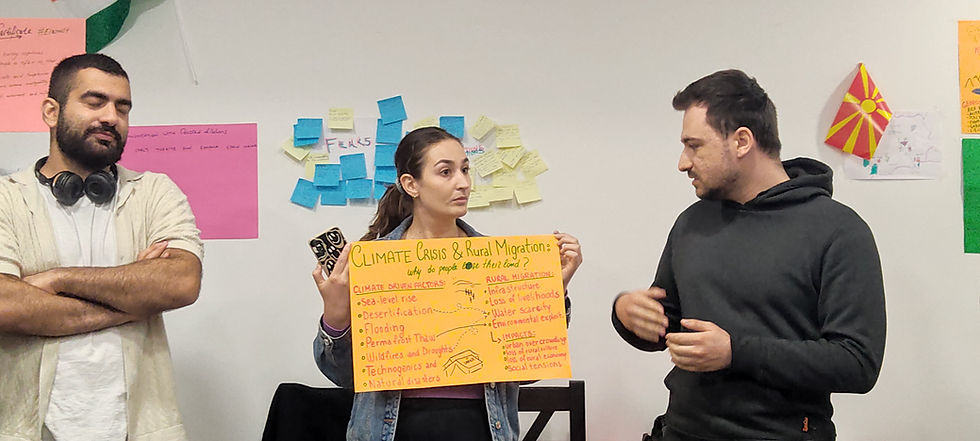

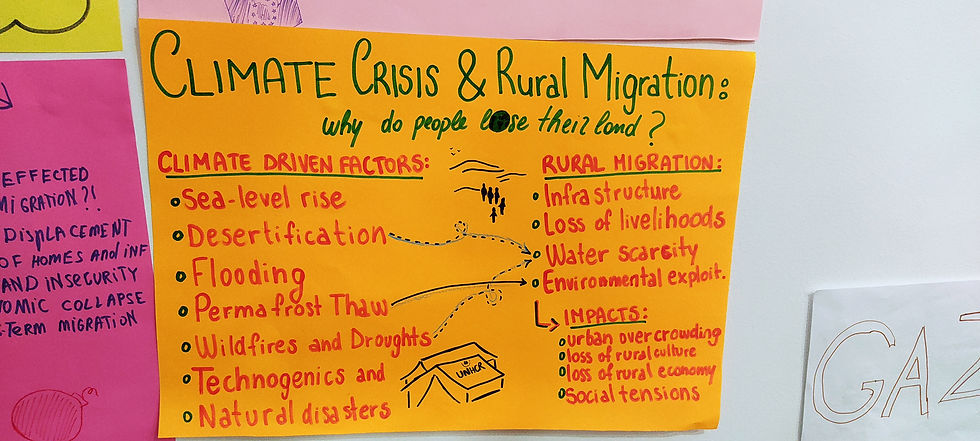

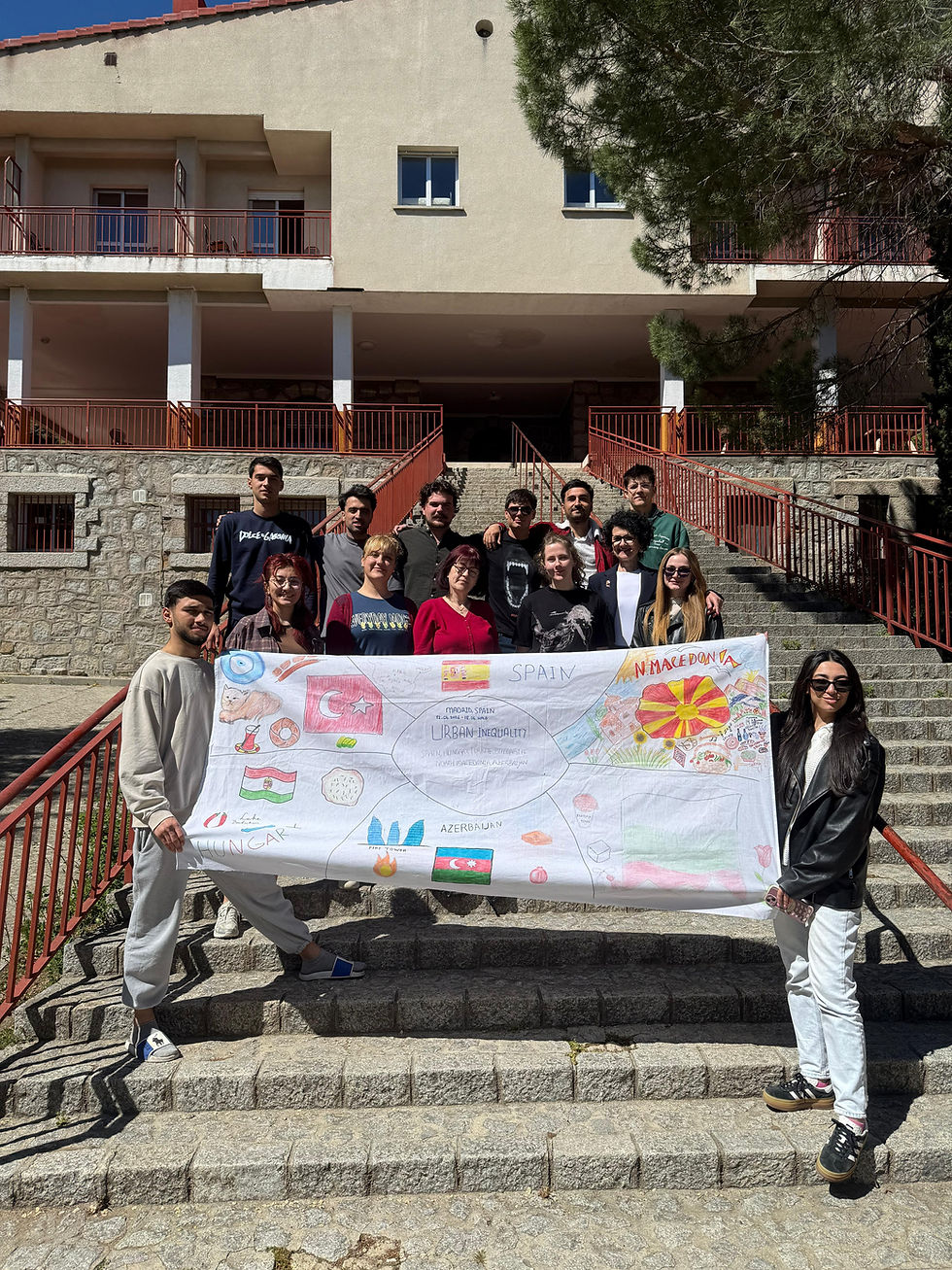
Rebirth: Climate Crisis and Migration was an Erasmus+ Mobility of Youth Workers project organized by KUFF Refugees and Minorities Solidarity Association in Madrid/Alcobendas, Spain, from 29 April to 5 May 2025. The mobility brought together youth workers from Spain (KUFF Refugees and Minorities Solidarity Association), Turkey (Aydinlik Yarinlar Toplulugu), North Macedonia (Association for International Youth Cooperation INTERAKTIV Bitola), Estonia (Artemis Women's Power MTÜ), Italy (Community of Natural Life), Romania (BD CLOUD SYSTEMS SRL), and Hungary (Vihar Lovasai Egyesület). Through a rich programme of non-formal education activities, participants explored the links between climate change, environmental degradation, armed conflict, migration, digital transformation, and intercultural cooperation while strengthening their professional competencies as youth workers.
A central objective of the project was to encourage participants to develop a deeper emotional connection with nature while improving communication, creativity, and self-expression. Music-based experiential learning activities inspired youth workers to interpret natural phenomena through movement, imagination, and body language. By combining artistic expression with bodily learning methods, participants strengthened their emotional awareness, reduced stress, enhanced group cohesion, and discovered innovative approaches that can later be transferred into youth work activities. These experiences demonstrated how creative non-formal education can inspire environmental sensitivity and active participation.
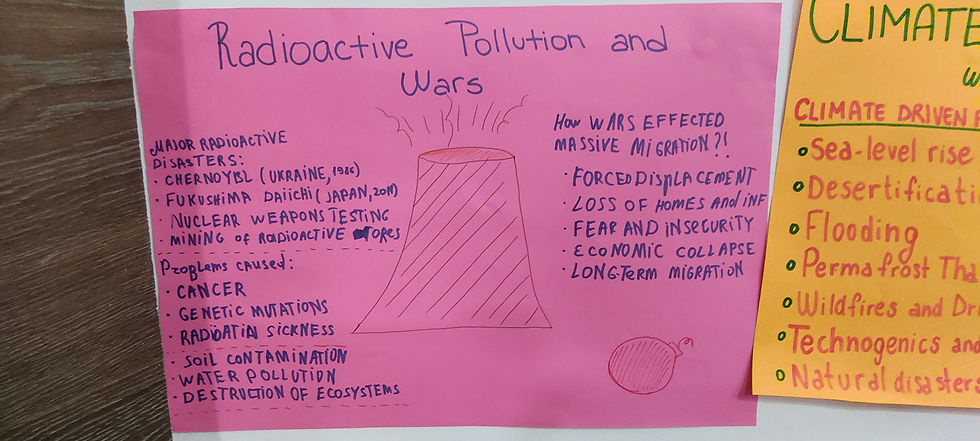
The project also focused on increasing participants' understanding of the relationship between environmental degradation, climate change, war, and forced migration. Through visual presentations, interactive discussions, and collaborative reflection, youth workers examined how armed conflicts contribute to ecosystem destruction, biodiversity loss, resource depletion, and the growing number of climate-displaced communities worldwide. By comparing examples from different countries and exchanging perspectives, participants improved their critical thinking, analytical skills, and ability to address complex global challenges through youth work and international cooperation.
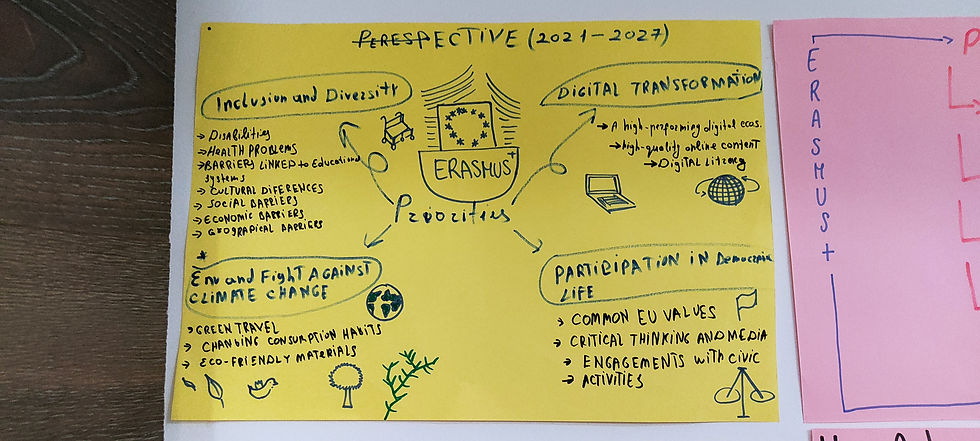
Another important dimension of the mobility was strengthening digital competencies and promoting the dissemination of Erasmus+ values. Participants worked collaboratively to design creative visibility materials, produce environmentally themed visual campaigns, create digital content for social media platforms and websites, and develop photo collages illustrating the impact of war and environmental destruction. These practical activities enhanced participants' digital literacy, teamwork, project planning, visual communication, and awareness of how digital tools can be used to increase the visibility and long-term impact of educational projects focused on sustainability.
The project also emphasized continuous reflection, evaluation, and intercultural learning. Interactive assessment methods enabled participants to monitor their own learning progress, express their ideas openly, and evaluate the effectiveness of the educational activities. At the same time, cultural exchange sessions created opportunities to share traditional food, dances, languages, clothing, and customs, strengthening mutual respect and intercultural dialogue among partner countries. By integrating environmental education, digital innovation, cultural diversity, and participatory learning methods, Rebirth: Climate Crisis and Migration equipped youth workers with practical knowledge, innovative educational tools, and stronger international networks that will support future initiatives promoting climate awareness, peace, and social inclusion.