Rebirth: Climate Crisis and Migration – Inspiring Environmental Responsibility Through Creativity and Active Learning
- May 11, 2025
- 2 min read

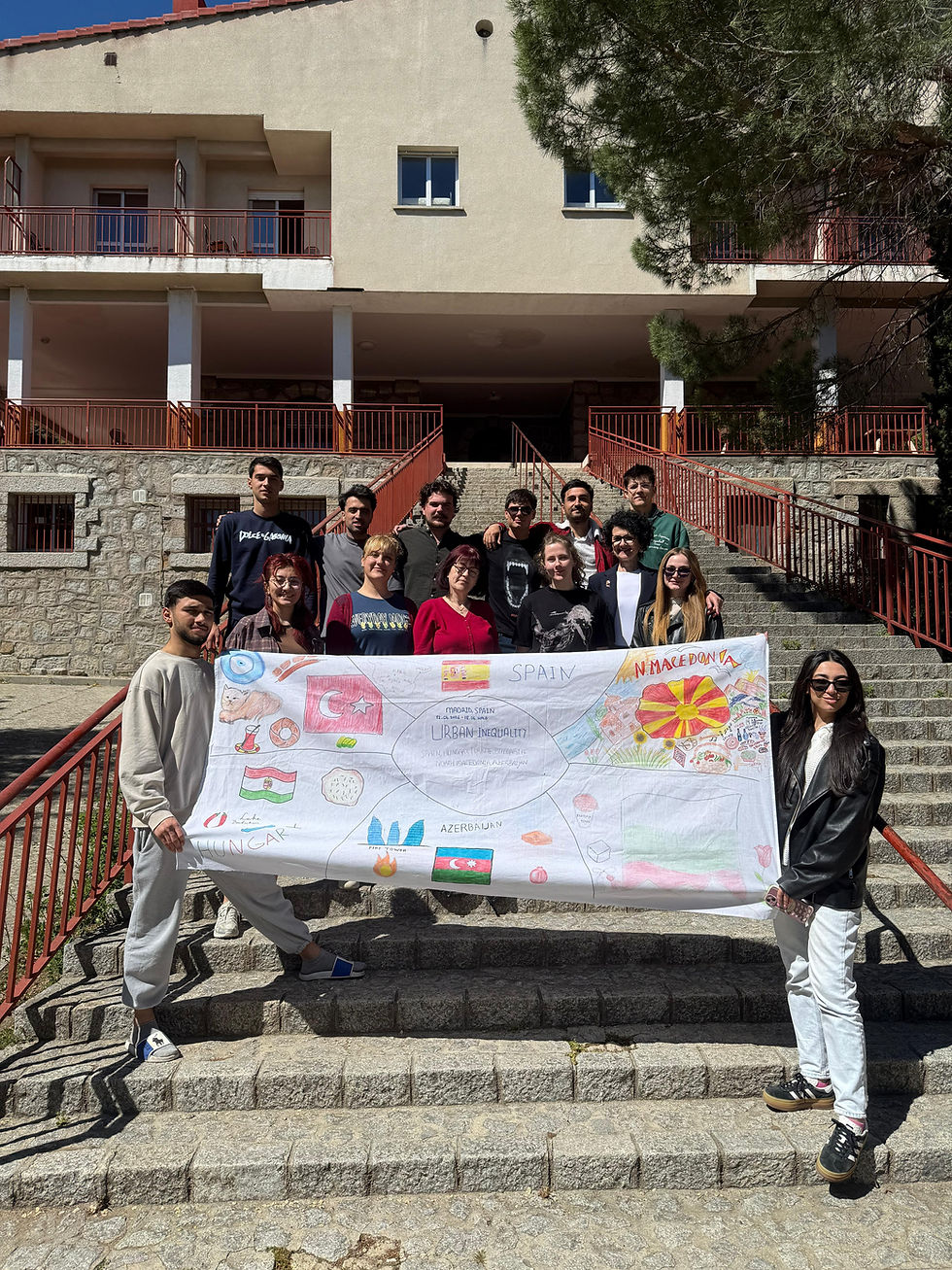
Rebirth: Climate Crisis and Migration was an Erasmus+ Mobility of Youth Workers project organized by KUFF Refugees and Minorities Solidarity Association in Madrid/Alcobendas, Spain, from 29 April to 5 May 2025. The project brought together youth workers from Spain (KUFF Refugees and Minorities Solidarity Association), Turkey (Aydinlik Yarinlar Toplulugu), North Macedonia (Association for International Youth Cooperation INTERAKTIV Bitola), Estonia (Artemis Women's Power MTÜ), Italy (Community of Natural Life), Romania (BD CLOUD SYSTEMS SRL), and Hungary (Vihar Lovasai Egyesület). Through a diverse programme of non-formal education activities, participants explored the interconnected impacts of climate change, armed conflict, migration, environmental protection, recycling, digital learning, and intercultural cooperation while strengthening their professional competences as youth workers.
One of the project's primary goals was to foster environmental awareness by connecting participants with nature through creative and experiential learning. Music-inspired movement activities encouraged youth workers to express emotions, interpret natural elements through body language, and strengthen their communication and self-confidence. Using artistic expression, bodily imagination, and movement-based learning, participants experienced how creativity can become an effective educational tool for promoting environmental sensitivity, emotional well-being, and stronger cooperation within international teams.
The project also deepened participants' understanding of how wars affect natural resources and accelerate climate-related challenges. Through interactive presentations, visual materials, discussions, and comparative examples from different countries, youth workers explored the consequences of conflicts on water resources, ecosystems, and human health. These activities strengthened critical thinking, encouraged evidence-based discussions, and enabled participants to examine the relationship between environmental degradation, access to clean water, forced migration, and sustainable development from multiple international perspectives.
Another important achievement of the mobility was the development of practical skills through collaborative problem-solving and community engagement. Participants researched how societies might have evolved without armed conflicts and transformed their ideas into creative performances that promoted peace, sustainability, and environmental responsibility. They also worked directly with local people in recycling workshops, producing artistic assemblage works from reusable materials while learning about circular economy principles, environmental responsibility, teamwork, communication, and community participation. These experiences demonstrated how youth work can combine creativity, sustainability, and active citizenship to inspire positive social change.
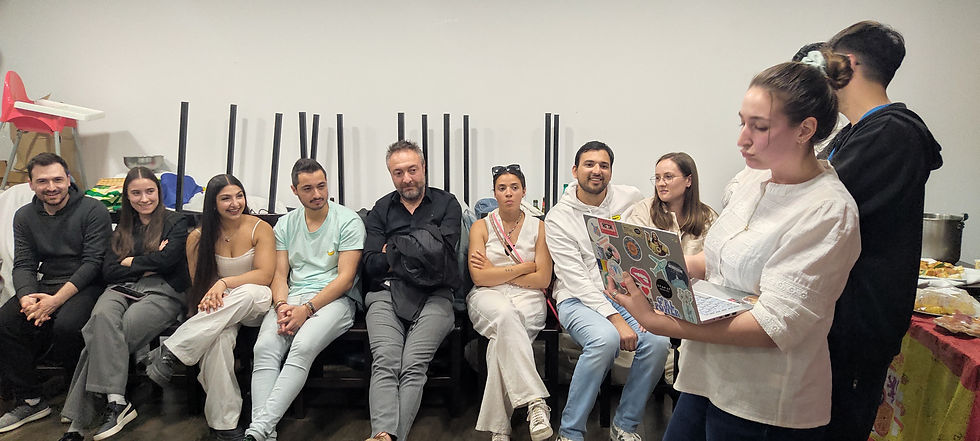
The mobility further strengthened participants' reflective practices and intercultural competencies. Evaluation activities encouraged youth workers to analyze their learning experiences, express their opinions openly, and contribute constructive feedback for future educational initiatives. Cultural exchange sessions provided opportunities to share traditional food, dances, languages, clothing, and customs, promoting mutual respect and appreciation of cultural diversity. By combining environmental education, peacebuilding, artistic creativity, recycling, community involvement, and intercultural dialogue, Rebirth: Climate Crisis and Migration equipped youth workers with innovative educational methods and practical competences that they can transfer into future Erasmus+ projects and their local communities.