Rebirth: Climate Crisis and Migration – Building Capacity Through Climate Action, Cultural Exchange, and Youth Work
- May 6, 2025
- 2 min read


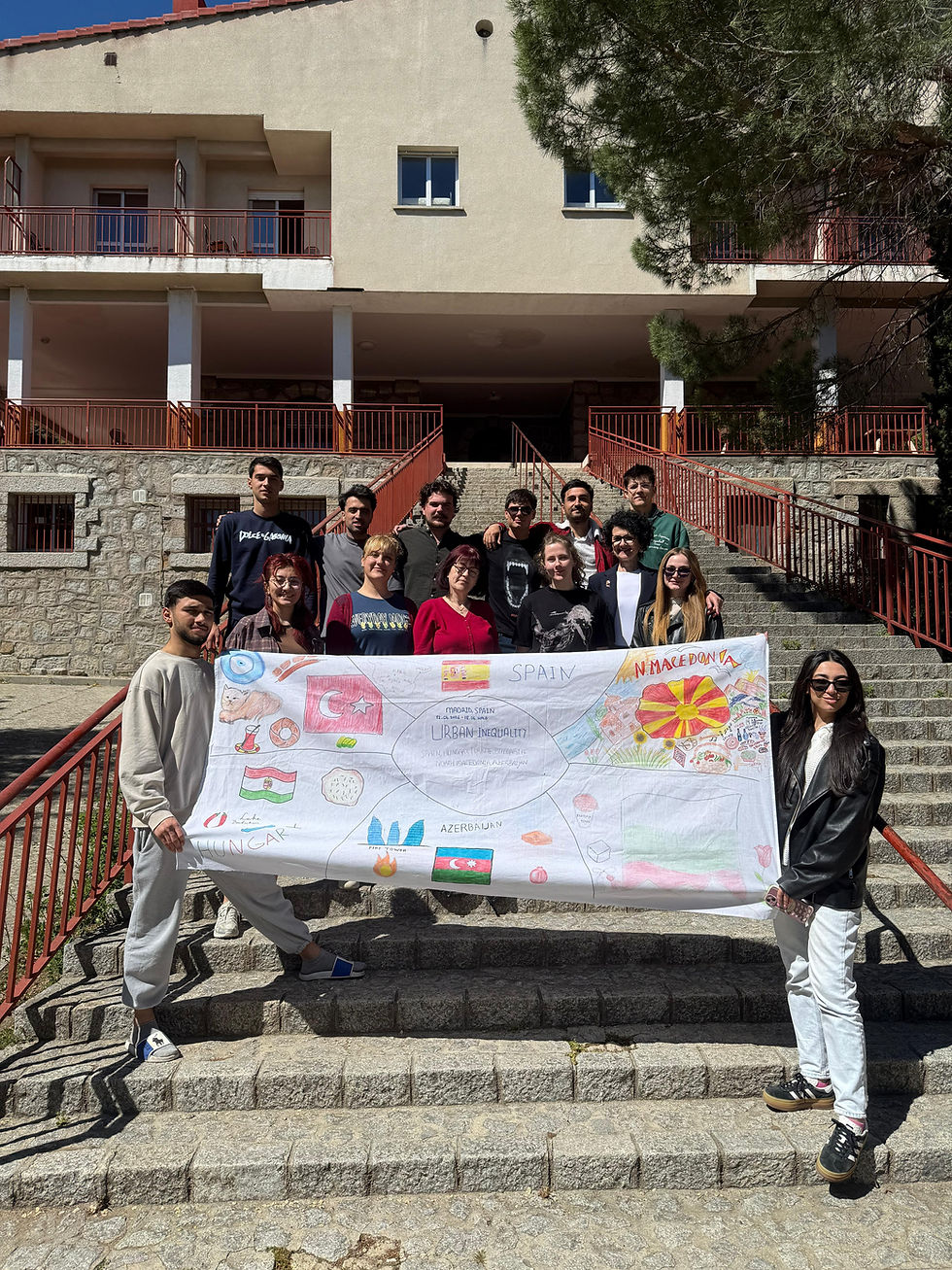
Rebirth: Climate Crisis and Migration was an Erasmus+ Mobility of Youth Workers project organized by KUFF Refugees and Minorities Solidarity Association in Madrid/Alcobendas, Spain, between 29 April and 5 May 2025. The project brought together youth workers from Spain (KUFF Refugees and Minorities Solidarity Association), Turkey (Aydinlik Yarinlar Toplulugu), North Macedonia (Association for International Youth Cooperation INTERAKTIV Bitola), Estonia (Artemis Women's Power MTÜ), Italy (Community of Natural Life), Romania (BD CLOUD SYSTEMS SRL), and Hungary (Vihar Lovasai Egyesület). Through non-formal education methods, participants explored the connections between climate change, forced migration, intercultural cooperation, and the role of youth work in promoting sustainable and inclusive communities.
One of the project's main objectives was to create a safe and collaborative learning environment where participants could build trust and establish meaningful relationships. Interactive orientation activities encouraged youth workers to become familiar with the working environment while strengthening communication and teamwork. Storytelling exercises inspired participants to reflect on environmental disasters and conflicts affecting their own countries, allowing them to share personal and national perspectives while developing empathy, intercultural understanding, self-confidence, and effective communication skills. Active participation, movement-based learning, and creative expression helped participants quickly connect with one another and become active contributors to the learning process.
The project also strengthened participants' professional knowledge of the Erasmus+ Programme and the Youthpass certification process. Through presentations, visual learning materials, discussions, and question-and-answer sessions, youth workers gained a comprehensive understanding of European mobility opportunities, non-formal education principles, and the recognition of learning outcomes. These sessions increased participants' confidence in designing, implementing, and evaluating international youth projects while helping them understand how Youthpass can document competencies acquired through youth work and support future professional development.
Another important achievement of the project was the development of reflection, evaluation, and continuous learning skills. Participants regularly assessed their learning experiences using interactive evaluation methods such as word association, mind mapping, and structured feedback tools. These approaches encouraged critical thinking, self-reflection, and honest communication, enabling participants to identify both personal learning outcomes and opportunities for improving future activities. By actively contributing to the evaluation process, youth workers experienced how quality assessment strengthens the impact and sustainability of Erasmus+ projects.
Intercultural learning represented one of the strongest dimensions of the mobility. Participants introduced their local traditions, languages, dances, food, clothing, and cultural values, creating an inclusive environment where diversity was celebrated as a strength. Through cultural exchange, collaborative learning, and shared experiences, youth workers broadened their understanding of different societies while reinforcing respect, tolerance, and European solidarity. By combining climate awareness, migration-related discussions, intercultural dialogue, and innovative non-formal education methods, Rebirth: Climate Crisis and Migration empowered youth workers with practical competencies that they can transfer into their local communities and future international cooperation projects.